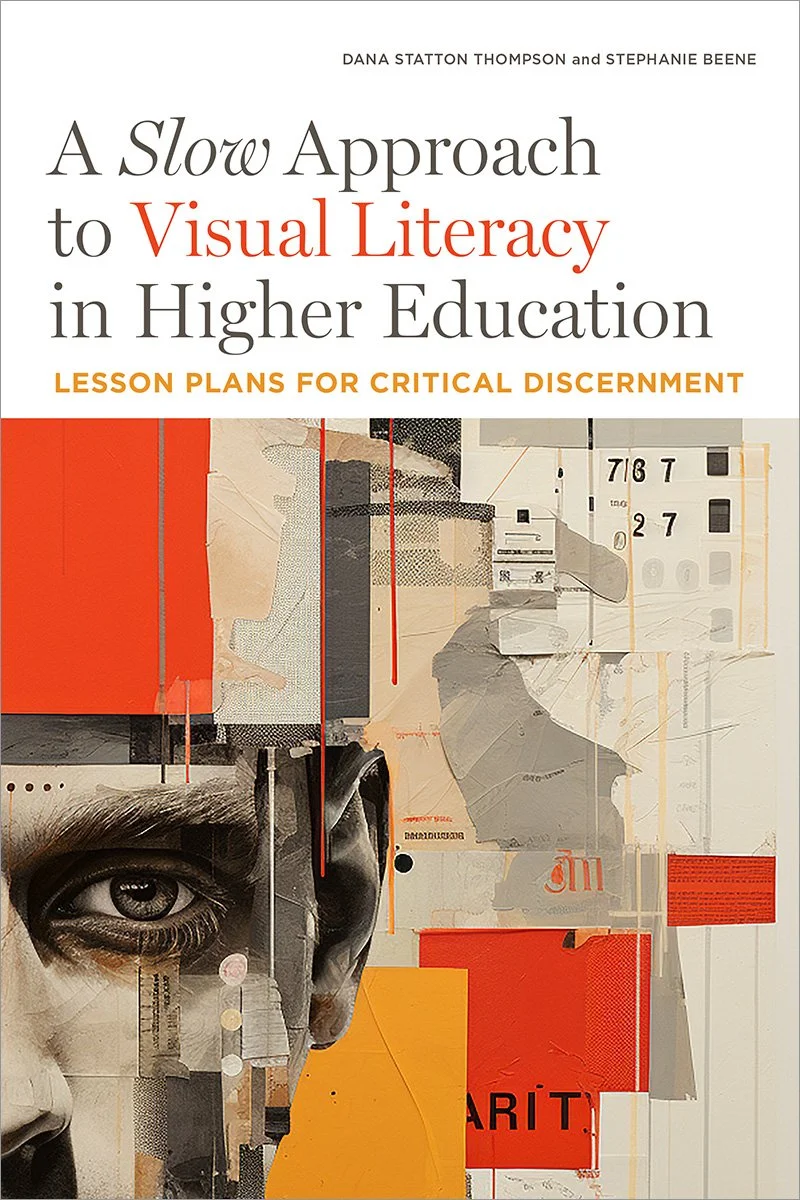
A Slow Approach to Visual Literacy
in Higher Education:
Lesson Plans for Critical Discernment
This co-authored book emphasizes the importance of attention and focus to the process of visual literacy, demonstrating how this approach supports ACRL’s Visual Literacy Competency Standards for Higher Education and the Framework for Visual Literacy in Higher Education. Library workers, educators, and instructors will discover:
dozens of flexible lesson plans for teaching visual literacy, scaffolded by competency levels: novice, intermediate, and advanced;
ways to integrate slow looking into the classroom, emphasizing careful observation and the sustained act of looking;
techniques for showing learners how to select images with intention, as well as carefully determine when and how to share those images;
reasons why slow creating is essential to understanding and applying visual literacy in the twenty-first century; and
a look at how increasing access to internet connectivity, generative artificial intelligence (AI), and new ethics for sharing and using information online will affect the future of visual literacy.
*2026 Winner of the ARLIS/NA Worldwide Books Award for Publications
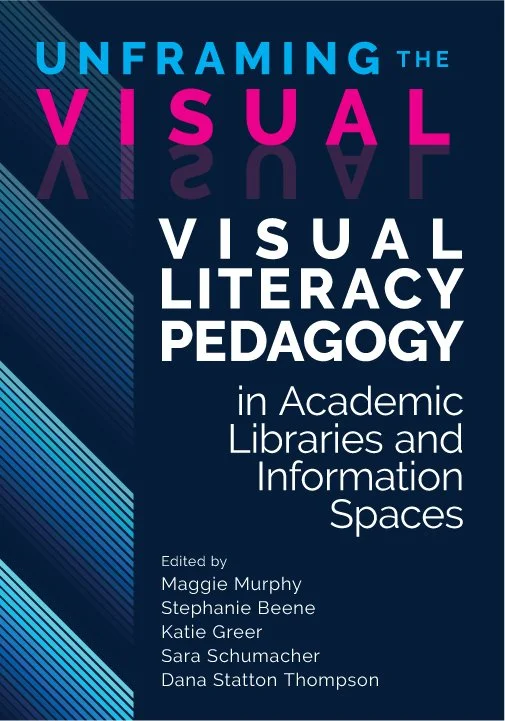
Unframing the Visual:
Visual Literacy Pedagogy in
Academic Libraries & Information Spaces
Visual literacy is an interconnected set of practices, habits, and values for participating in visual culture that can be developed through critical, ethical, reflective, and creative engagement with visual media. Approaches to teaching visual literacy in higher education must include a focus on context and not just content, process and not just product, impact and not just intent. Unframing is an approach to visual literacy pedagogy that acknowledges that visuals are a pervasive part of everyday life, as well as embedded into every scholarly discipline. In four parts, Unframing the Visual: Visual Literacy Pedagogy in Academic Libraries and Information Spaces explores: Participating in a Changing Visual Information Landscape; Perceiving Visuals as Communicating Information; Practicing Visual Discernment and Criticality; Pursuing Social Justice through Visual Practice.
Twenty-four full color chapters present a range of theoretical and practical approaches to visual literacy pedagogy that illustrate, connect with, extend, and criticize concepts from the Framework for Visual Literacy in Higher Education: Companion Document to the Framework for Information Literacy for Higher Education. Topics include using TikTok to begin a conversation on academic honesty and marginalization; supporting disciplines to move to multimodal public communication assignments; critical data visualization; and exclusionary practices in visual media.
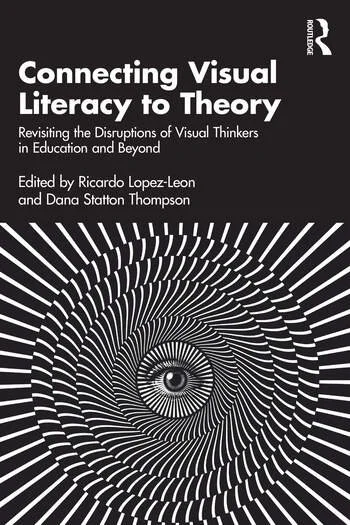
Connecting Visual Literacy to Theory Revisiting the Disruptions of Visual Thinkers in Education and Beyond
This co-edited volume seeks to close the gap between education systems across the world that remain systematically devoted to understanding our world through text rather than images.
Through an exploration of the contributions of well- and lesser-known visual thinkers from across disciplines and geographies, the contributors offer contemporary appraisals and modern re-conceptualizations of the subject. The book illuminates how experts from various disciplines ranging from art, communication, education, and philosophy laid the foundations for what we know today as visual literacy. These foundations and innovative ways of thinking and understanding images have been disruptive, but until now, have been relatively understudied.
As such, the chapters examine the context of individual thinkers, expanding upon famous theories and providing new insight into why these visual and cognitive processes are imperative to learning and education and to disciplines spanning art history, museum studies, philosophy, photography, and more.
The authors, all members of the International Visual Literacy Association (IVLA), are committed to advancing the study of visual literacy by raising new questions and proposing new routes of inquiry.